Background
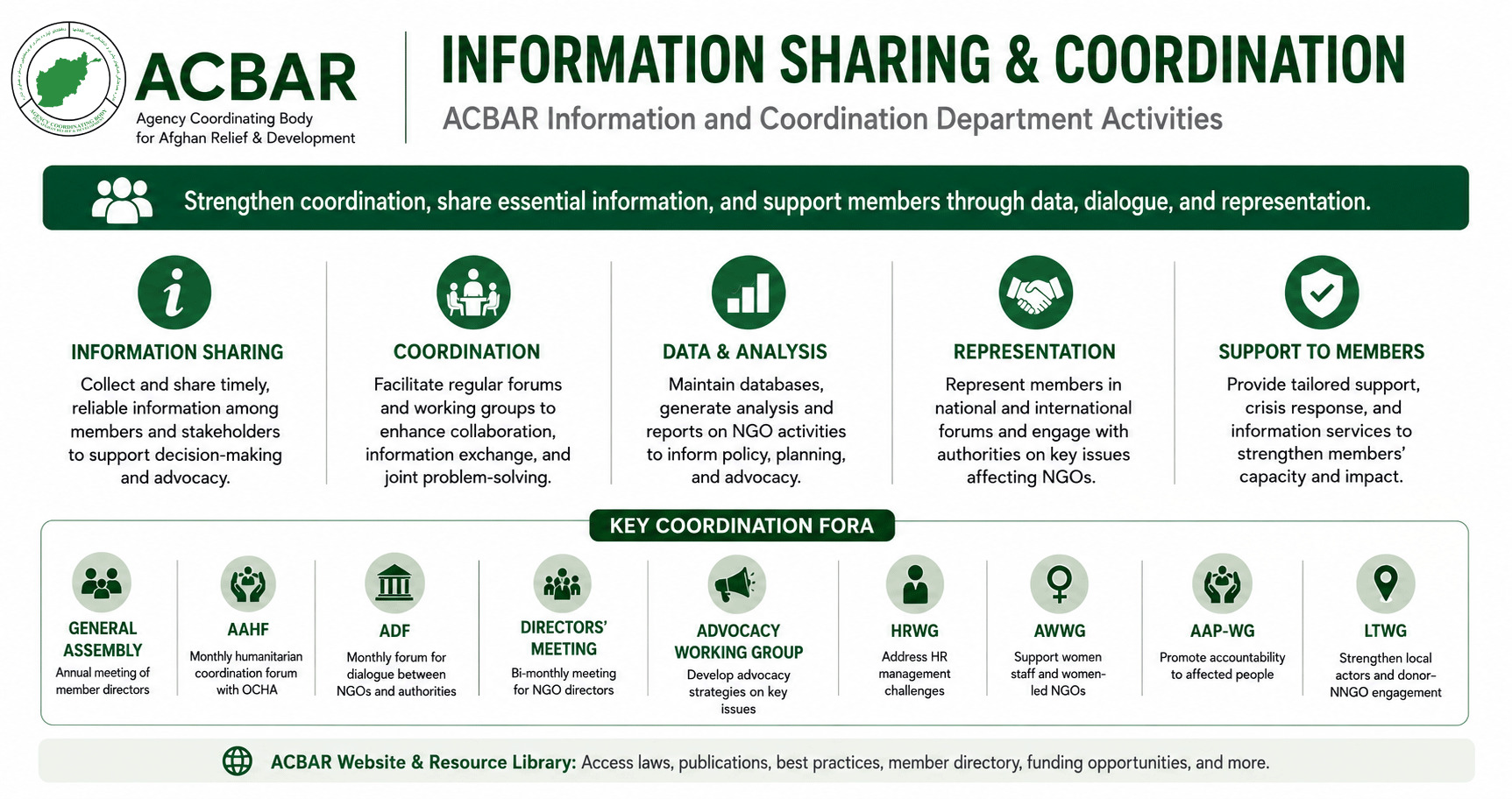
The Agency Coordinating Body for Afghan Relief and Development (ACBAR) was established in Peshawar in August 1988 as a membership organization. ACBAR was created in response to the demand from NGOs working with Afghan refugees in Pakistan and across the border in Afghanistan to coordinate assistance and delivery of services more efficiently. Since 2001, ACBAR has focused on facilitating the coordination of its members, advocacy efforts, dissemination of information, and the promotion of ethical standards of members through a Code of Conduct and the Core Humanitarian Standards.
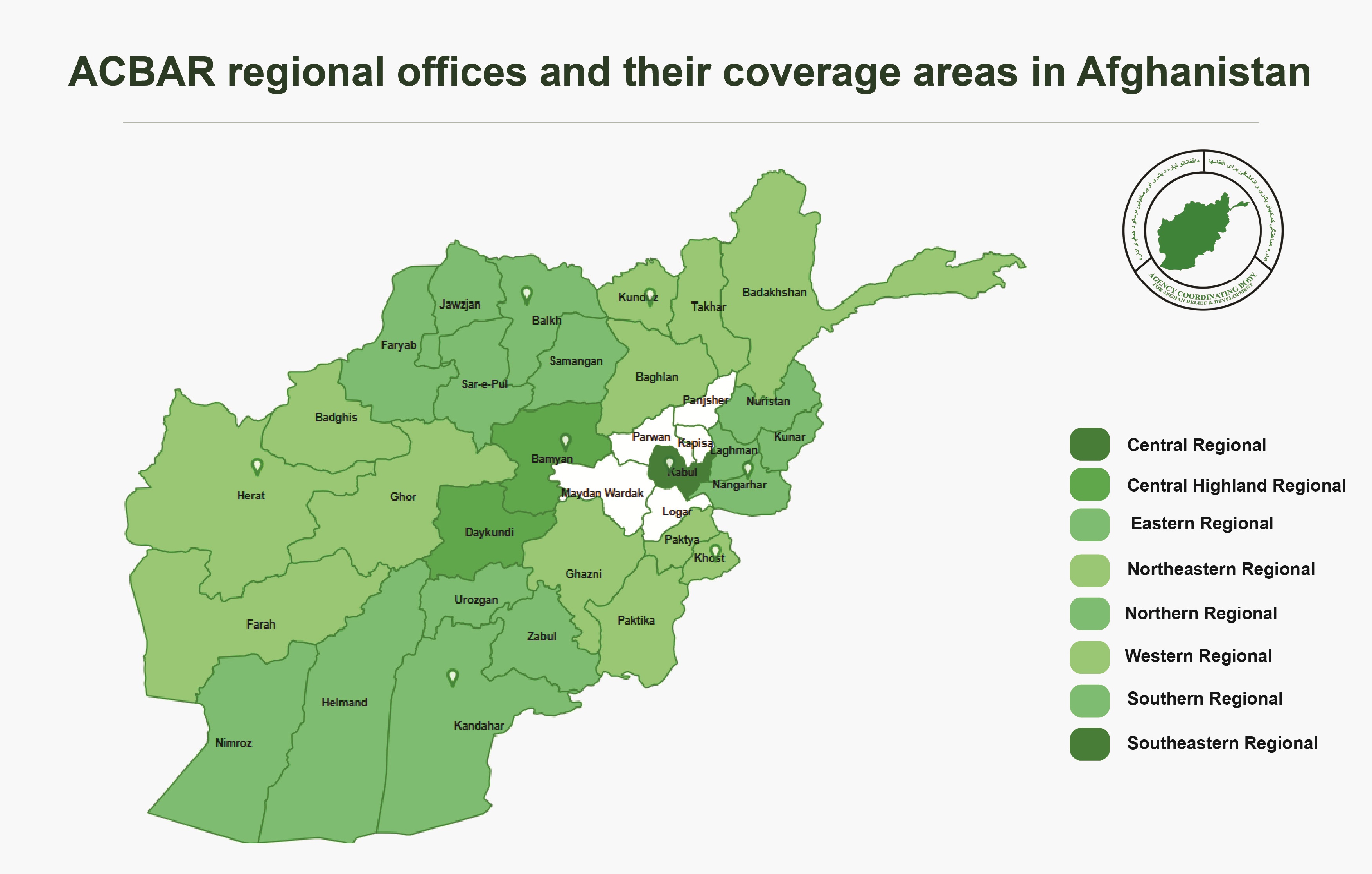
Currently ACBAR has 230 members, including national and local NGOs, as well as international NGO members. On an annual basis, ACBAR members select a Steering Committee comprised of 15 NNGO and INGO representatives to provide strategic direction for the organization. The day-to-day management of ACBAR is led by the Secretariat, including the Executive Director, a Senior Leadership Team, and nearly 80 staff members across all offices. ACBAR’s Main Office is located in Kabul. ACBAR also has seven regional offices in Kandahar, Nangarhar, Balkh, Herat, Kunduz, Khost and Bamiyan provinces.
Vision, Mission:
To accomplish our goals, ACBAR operates according to a broad vision and mission for our organization and our members.
Our VISION continues to be to support Effective NGOs, Stronger Communities.
That vision is supported by our organization’s MISSION STATEMENT: To provide an efficient platform for members to carry out effective humanitarian and development activities in Afghanistan.
Current Humanitarian Context:
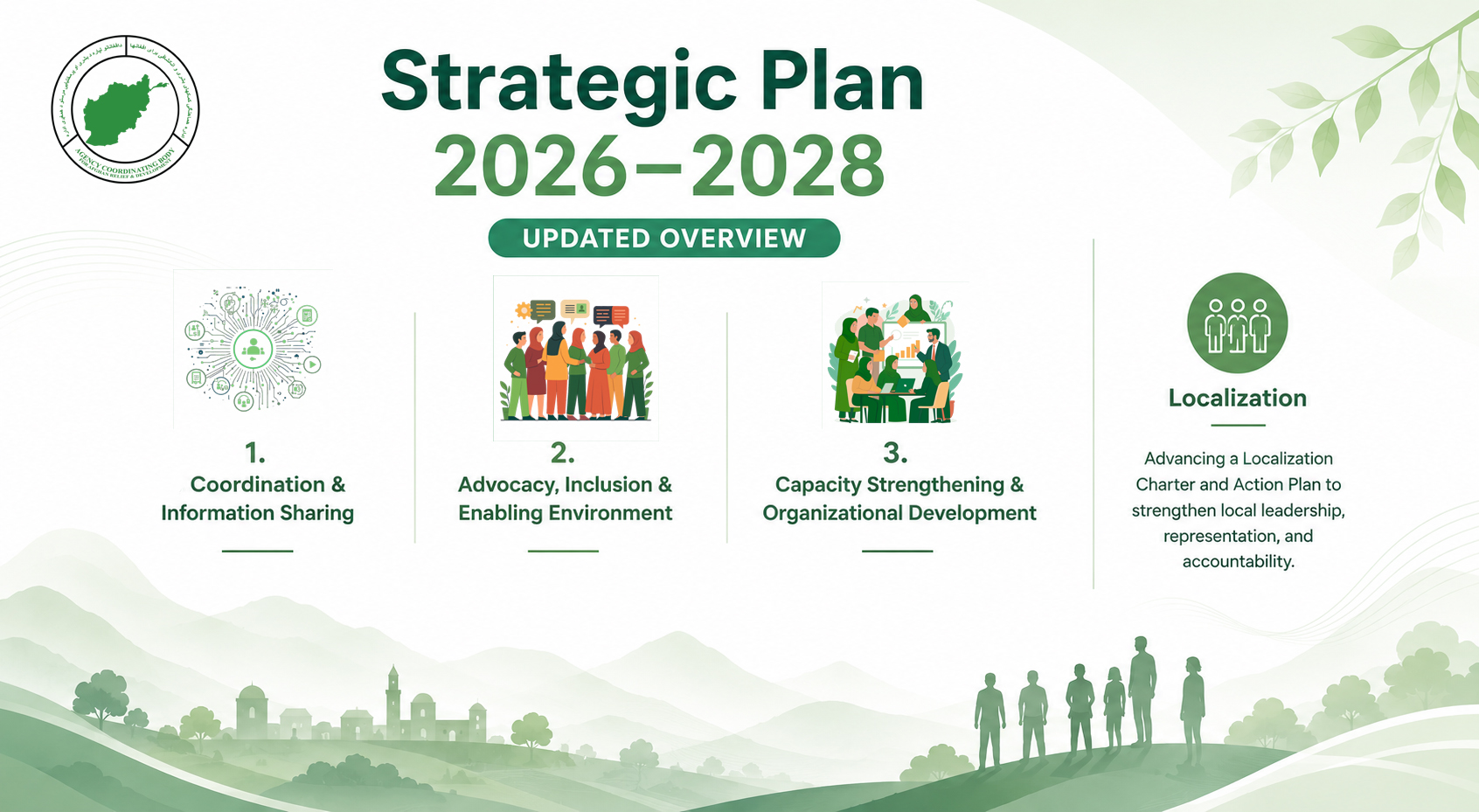
Afghanistan’s humanitarian and development landscape is undergoing a structural transformation. Declining aid flows, shifting donor priorities toward Basic Human Needs (BHN) approaches, increased momentum for localization, and a complex and evolving political environment are fundamentally reshaping how assistance is delivered and coordinated.
These shifts show that traditional coordination models are no longer enough. To meet today’s challenges, ACBAR is moving beyond its role as a coordination platform to become a proactive institution—supporting NGO effectiveness, amplifying collective representation, and ensuring access to resources and decision-making spaces.
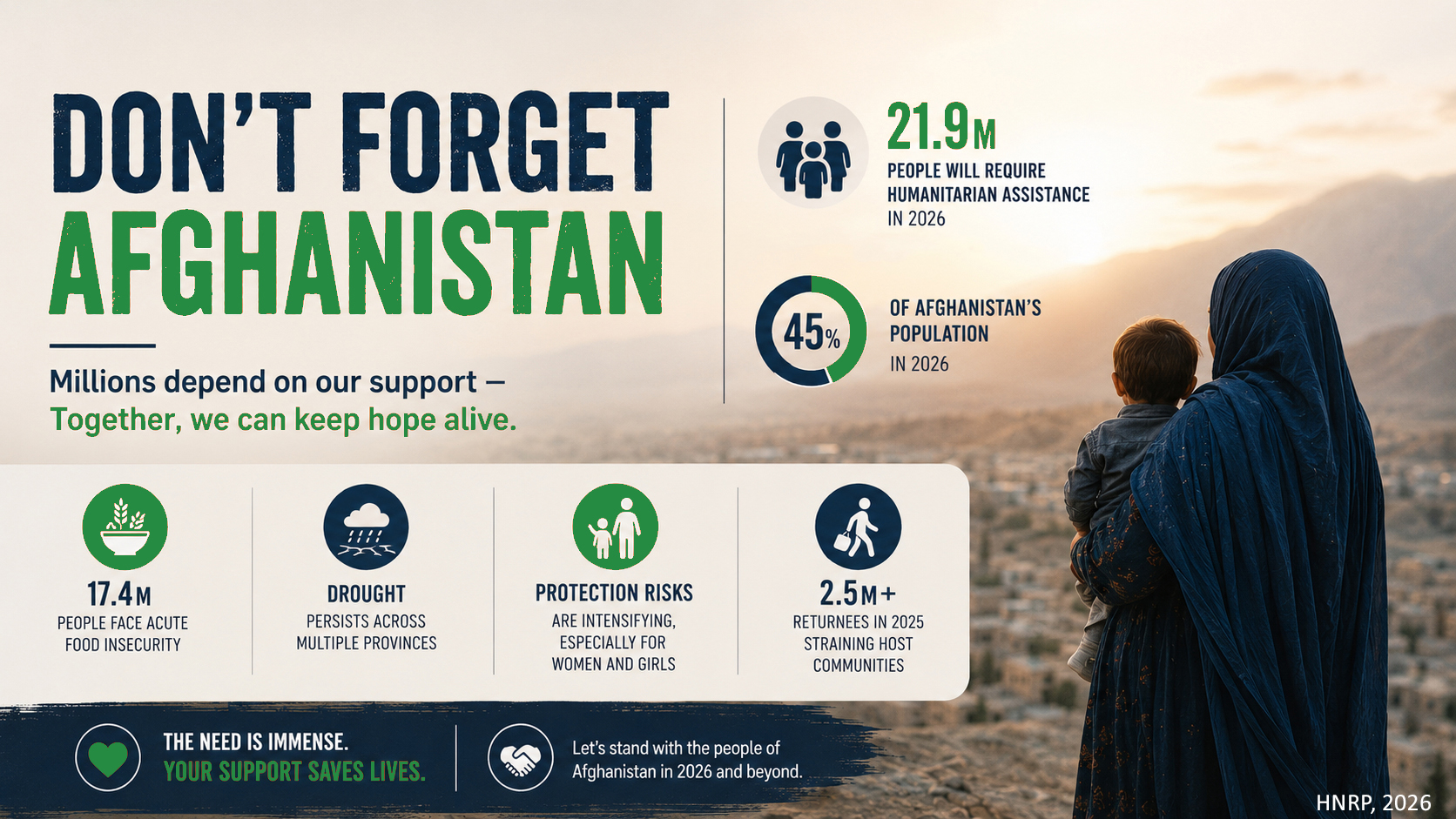
In 2026, an estimated 21.9 million people, representing 45 percent of Afghanistan’s population, will require humanitarian assistance. Although this reflects a slight decrease from 2025, needs remain among the highest worldwide in a non-conflict context. Humanitarian conditions are driven by chronic structural vulnerability, escalating food insecurity, climate-related shocks, disease outbreaks, and serious protection risks, particularly for women and girls. Acute food insecurity is expected to affect 17.4 million people, including 4.7 million facing emergency conditions, more than double the level of 2025. Persistent drought affects multiple provinces, with below average rainfall and higher temperatures forecast. Protection risks are intensifying due to restrictions on women and girls, explosive ordnance, gender-based violence, child labor, and early marriage. Finally, large scale cross border returns - over 2.5 million Afghans in 2025 alone - places significant strain on host communities. @HNRP, 2026
Our Mandate:
In support of our members, ACBAR commits to the following key mandates:
- Act as an independent coordinating body of national, local, and international NGOs that exists to serve and facilitate the work of its NGO members in order to address efficiently and effectively, the humanitarian and development needs of the people of Afghanistan.
- Support our members to provide humanitarian and/or development assistance to the Afghan people regardless of ethnic background, political affiliation, or religious belief, according to the Code of Conduct of NGOs.
- Enhance/strengthen linkages and coordination among stakeholders in humanitarian and development sectors.
- Support NGOs and humanitarian partners through coordination of emergency preparedness and response in the event of rapid onset emergencies.
- Influence policies and practices on the basis of humanitarian and development principles and standards through strategic advocacy.
- Promote best practice and sector-wide standards and adherence to principled approaches in delivery of services, and enable joint approaches and responses and shared-learning.