Capacity Strengthening and Organization Development
Strengthening Afghan NGOs Through Demand-Driven Capacity Strengthening Support
ACBAR's Capacity Building Program supports Afghan national non-governmental organizations (NNGOs , LNGOs), to strengthen their institutional capacity, technical expertise, and leadership within the humanitarian and development sector. Building on nearly a decade of experience delivering organizational development support, ACBAR now offers a flexible, demand-driven model of capacity strengthening designed to meet the specific needs of each partner organization.
ACBAR's Capacity Building Program supports Afghan national non-governmental organizations (NNGOs , LNGOs), to strengthen their institutional capacity, technical expertise, and leadership within the humanitarian and development sector. Building on nearly a decade of experience delivering organizational development support, ACBAR now offers a flexible, demand-driven model of capacity strengthening designed to meet the specific needs of each partner organization.
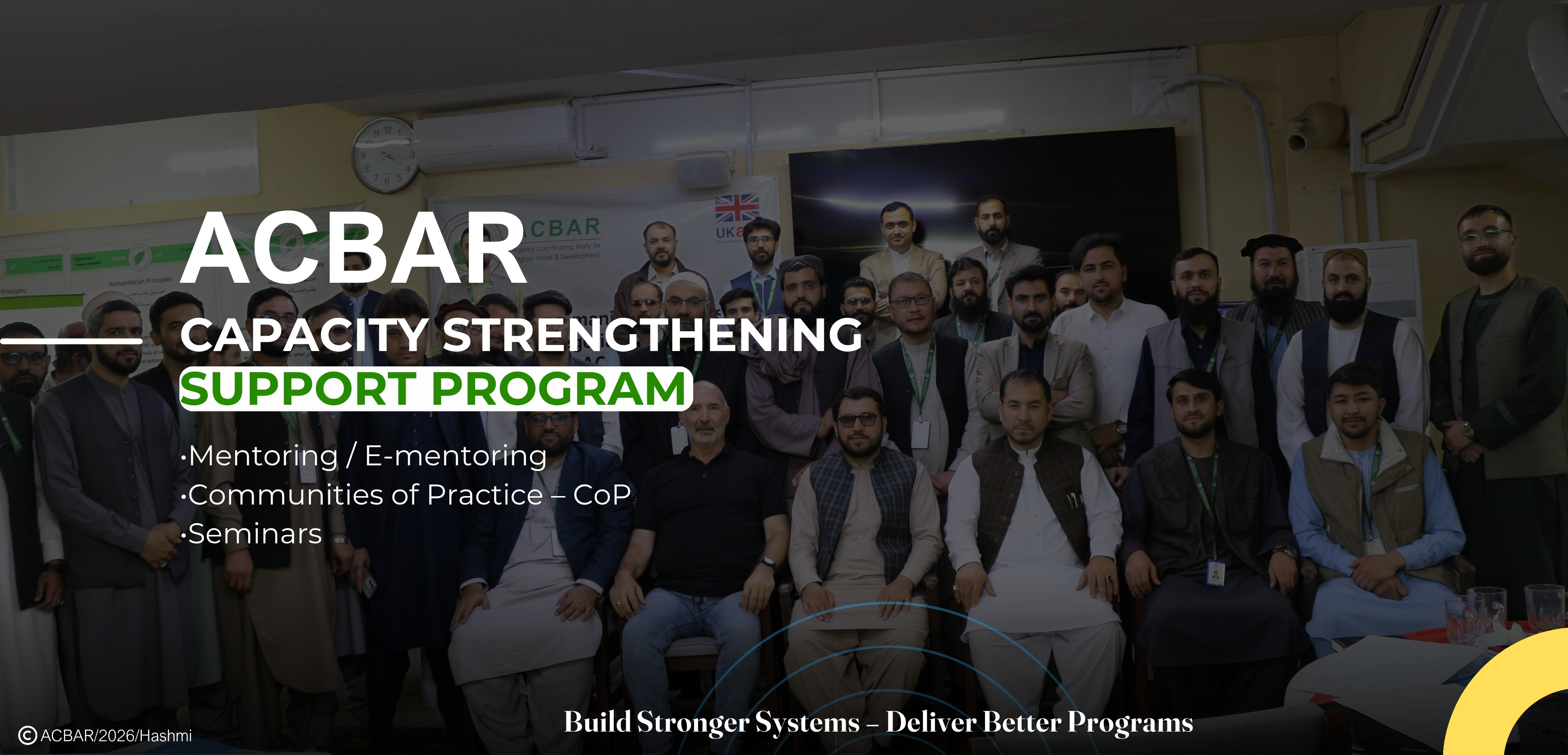
Through individualized technical mentoring, structured peer-learning platforms, applied research training, and emergency response coordination support, ACBAR's Capacity Building Program equips Afghan civil society actors to take on greater leadership roles, deliver higher-quality programming, and build stronger, more resilient organizations capable of sustaining impact over the long term.
Services are available to ACBAR members free of charge, with a modest service fee applicable for non-member organizations. Priority is given to organizations demonstrating clear capacity needs, as well as organizations and partners referred through international organizations and coordination platforms. ACBAR provide four Modalities of Capacity Building recently.
1. Capacity Strengthening Support — AVAILABLE NOW!
At the core of ACBAR's Capacity Building Program is a structured, organizational mentoring approach, delivered both in person and through e-mentoring for partner organizations based at the national, sub-national and regional level. This modality enables ACBAR to provide consistent, accessible technical support to NNGOs and LNGOs regardless of their geographic location.
The mentoring process follows three structured phases:
• Departmental Capacity Assessment (DCA): Each partner organization undergoes a Departmental Capacity Assessment, conducted by an assigned ACBAR Capacity Specialist, to identify departmental needs and priority areas for development.
• Findings-Based Workplan: Based on the DCA findings, a tailored workplan is jointly developed with the organization, outlining specific, achievable capacity strengthening actions and milestones.
• 30–90 Day Implementation Period: Capacity strengthening activities are then delivered over a structured 30 to 90-day period, through a combination of on-site mentoring visits and remote e-mentoring engagement — ensuring sustained, practical support until measurable organizational progress is achieved.
This mentoring model allows ACBAR to deliver responsive, evidence-based support that is directly shaped by each organization's own operational context, rather than a standardized, one-size-fits-all approach.
ACBAR members receive all Capacity Strengthening Support Services completely free of charge as part of their membership benefits. Non-member organizations are warmly welcome to access ACBAR's full range of capacity strengthening services through a minimal, fixed, and transparently structured service fee — ensuring high-quality support remains accessible to all Afghan NGOs.
Institutional Capacity Building — 2,500 AFN total
This is a one-time, all-inclusive fee covering the complete capacity building process:
Departmental Capacity Assessment (DCA)
Findings-based Action Plan development
# of Mentoring visits within the 30 – 90 day workplan cycle
This is a one-time, all-inclusive fee covering the complete capacity building process:
Departmental Capacity Assessment (DCA)
Findings-based Action Plan development
# of Mentoring visits within the 30 – 90 day workplan cycle
ACBAR members Registration Link ACBAR Non members Registration Link
2. Communities of Practice (CoPs) — Starting August 2026
ACBAR's Communities of Practice are peer-learning groups of 12 to 15 NNGOs or LNGOs, designed specifically for organizations that have previously completed extensive capacity strengthening programs in past years — such as ACBAR's Twinning Program, SHAPE TPP, REALIGN, or other recognized initiatives. CoPs offer a platform for experienced Afghan NGOs to engage in advanced, peer-driven learning and collective problem-solving.
Each Community of Practice is focused on a specific thematic area relevant to organizational and sectoral advancement, including (but not limited to):
• Coordination Leadership
• Consortium and Partner Management
• Data Management and Analysis
• Additional thematic areas, as identified through member consultation
Each CoP is supported by an ACBAR Capacity Specialist, alongside technical experts from international organizations who serve as observers and provide specialized guidance — fostering deeper collaboration, trust-building, and shared learning among Afghanistan's most experienced national and local organizations.
Register Your Organization for Communities of Practice (CoP)
3. Research & Data Specialized Seminars — Coming Fall 2026 & Spring 2027
To strengthen national NGOs' capacity to independently collect, manage, and analyze data for evidence-based program design, ACBAR facilitates applied Research & Data Specialized Seminars in partnership with leading research-focused organizations (technical mentoring partners to be confirmed). These seminars combine practical, hands-on exercises with technical mentoring, equipping participating organizations with the skills needed to lead high-quality research and assessments at the field level.
Registration Link for Seminars – WILL BE ACTIVATED ONCE THE PROGRAM STARTS.