Advocacy, Inclusion and Enabling Environments
ACBAR continues to support its members in navigating an increasingly complex and restrictive operational environment in Afghanistan. Ongoing regulatory challenges, shrinking humanitarian funding, operational disruptions, and restrictions affecting humanitarian actors—particularly Afghan women staff and women-led organizations—continue to impact the ability of NGOs to deliver principled humanitarian and basic needs assistance across the country.
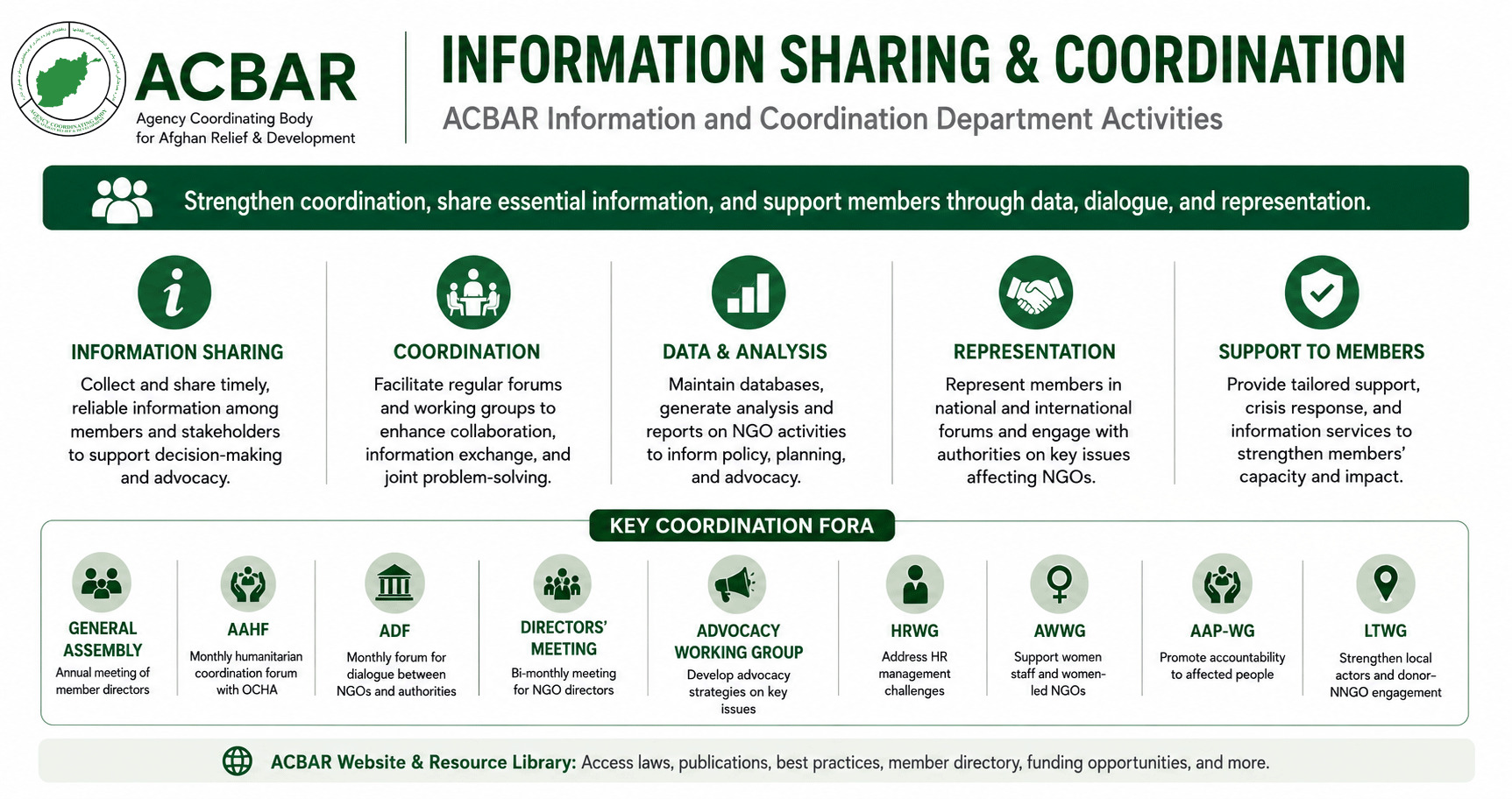
In response to these challenges, ACBAR has strengthened its role as a collective coordination and advocacy platform for national and international NGOs. Through sustained engagement with members, donors, UN agencies, coordination bodies, and relevant authorities, ACBAR works to promote a more enabling environment for humanitarian and development operations grounded in humanitarian principles, inclusion, accountability, and operational realities.
ACBAR’s advocacy efforts are coordinated primarily through the Advocacy Working Group (AWG) and the ACBAR Women’s Working Group (AWWG). The AWG serves as a dedicated platform for collective analysis, strategic engagement, and joint representation on operational and policy issues affecting NGOs. Through the AWG, ACBAR facilitates coordinated messaging, policy discussions, and representation of member priorities in national and international forums. Advocacy efforts increasingly focus on humanitarian access, operational continuity, localization, community accountability, and sustainable support for Afghan NGOs.
The AWWG continues to provide an important platform for Afghan women professionals, women-led organizations (WLOs), and female NGO staff to engage on issues affecting women’s participation in humanitarian and basic needs programming. The working group supports dialogue, peer learning, and collective engagement to address operational barriers facing women staff and WLOs while promoting inclusive and community-responsive approaches to humanitarian action.
Recognizing the importance of evidence-based advocacy, ACBAR is strengthening mechanisms to ensure advocacy priorities are informed by field realities, operational data, and community perspectives. Advocacy initiatives increasingly incorporate feedback from affected populations and member organizations to support more responsive, practical, and context-sensitive engagement with stakeholders.
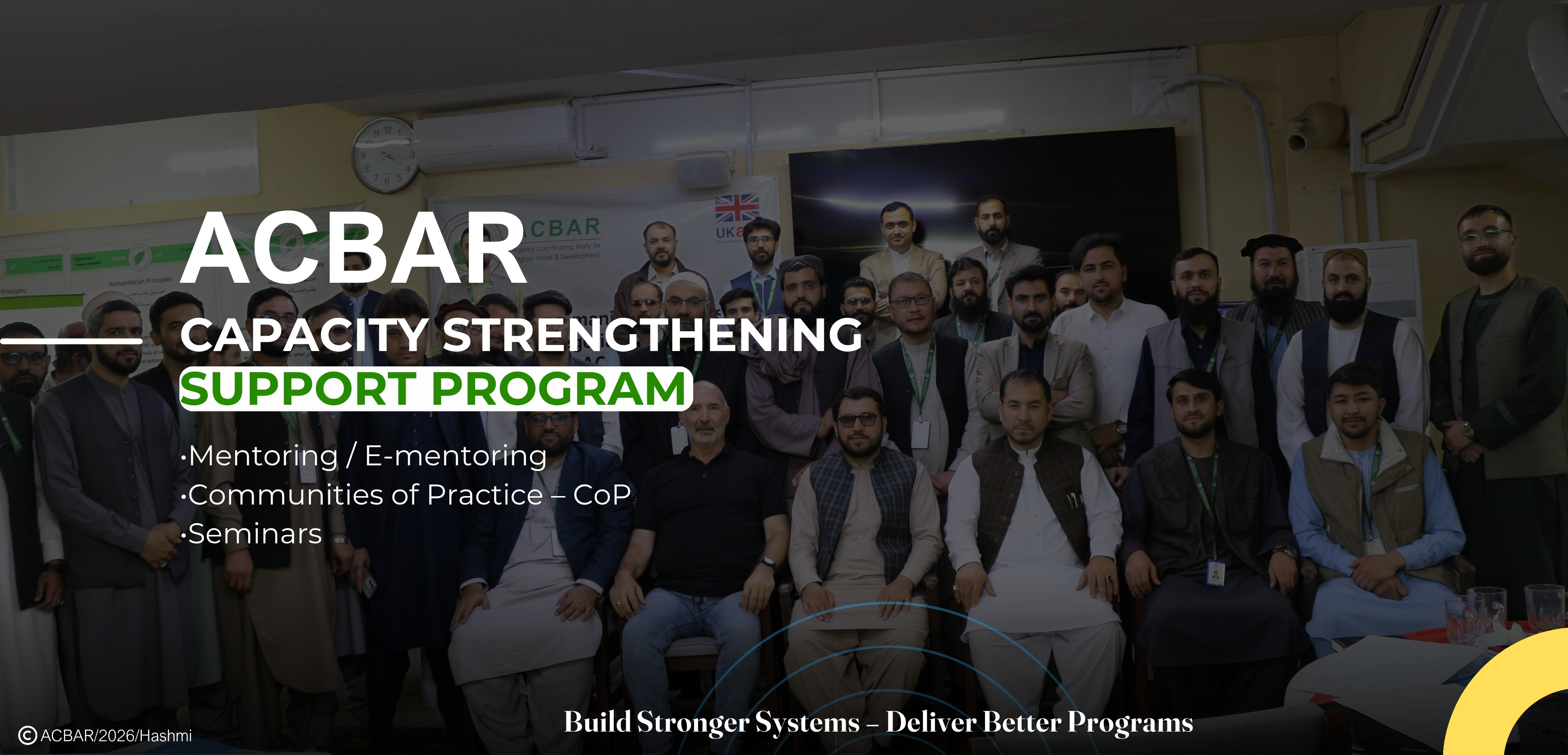
In parallel, ACBAR continues to invest in strengthening member capacity in advocacy, coordination, and engagement. Regional trainings and technical sessions support NGOs to better understand advocacy tools, humanitarian principles, stakeholder engagement approaches, and risk-informed communications in Afghanistan’s evolving operational context.
Communication and Engagement
ACBAR remains committed to strengthening communication, coordination, and engagement with its members, partners, and stakeholders across Afghanistan. As a member-driven platform representing more than 200 national and international NGOs, ACBAR continuously works to improve information-sharing, visibility, and collaboration among humanitarian and development actors.
To promote transparency, timely communication, and effective coordination, ACBAR regularly shares updates, resources, and sector information through multiple communication channels and engagement platforms. These efforts support stronger collaboration, advocacy, and knowledge-sharing among members and partners.
Monthly ACBAR Newsletter
ACBAR publishes a monthly newsletter as a key information-sharing platform for members and stakeholders. The newsletter includes:
- National and international humanitarian and development updates
- Coordination meetings, events, and sector highlights
- Advocacy and engagement updates
- Program updates, including Capacity Development, LTWG, and AAP initiatives
- A monthly spotlight featuring one INGO and one NNGO member organization
The newsletter also serves as a platform to highlight member achievements, share best practices, and strengthen collaboration across the NGO community.
Communication Channels
Official Website
The ACBAR Official Website serves as the central platform for organizational updates, publications, job posting, coordination resources, announcements, advocacy materials, training opportunities, and member information.
Social Media Platforms
ACBAR maintains official accounts on Facebook, LinkedIn, and X (formerly Twitter) to share updates, publications, advocacy messages, events, and coordination information while increasing engagement and visibility across the sector.
Through these platforms, ACBAR promotes timely information-sharing and strengthens communication with members, partners, donors, and the wider public.
Official Communication Notice
ACBAR maintains only one official account on each social media platform. Members and stakeholders are advised that there are numerous fake pages and groups falsely claiming to represent ACBAR. ACBAR is not responsible for information shared through unofficial platforms.
Members are strongly encouraged to follow and engage only with ACBAR’s verified official communication channels to ensure authenticity and accurate information-sharing.